Stop Wasting Time on Tax Cleanup: 5 Steps How to Keep Tax-Ready Books Year-Round (Easy Guide for Small Business Owners)
You know that sinking feeling you get every January when you realize tax season is coming and your books are a mess?
The scramble to find receipts. The panic when you can't remember what that $487 charge was for. The stress of watching your tax preparer's hourly rate tick up while they dig through your disorganized records.
Here's the truth: tax season doesn't have to be a scramble.
If you're keeping tax-ready books all year long, April 15th becomes just another Tuesday. No cleanup. No chaos. No last-minute stress.
The secret? Monthly bookkeeping. Not the "I'll get to it eventually" kind: the systemized, consistent kind that keeps your financial data clean and your business tax-ready 365 days a year.
Let's walk through the five steps that'll help you stop wasting time on tax cleanup and start keeping books that are ready whenever you need them.
Why "Tax Season Cleanup" Is Costing You More Than You Think
Before we dive into the how, let's talk about why this matters.
When you wait until tax season to clean up your books, you're not just adding stress: you're adding costs:
Higher tax prep fees because your CPA has to sort through a year of mess
Missed deductions because you forgot to track certain expenses
1099 nightmares because you didn't organize contractor payments monthly (we've covered common 1099 mistakes here)
Poor business decisions because you don't actually know what your numbers are until tax time
Service-based business owners especially feel this pain. When you're busy delivering for clients, bookkeeping falls to the bottom of the to-do list. Until tax season hits.
The good news? It doesn't have to be this way.

Step 1: Set Up a Monthly Bookkeeping Routine (And Actually Stick to It)
Here's the foundation of tax-ready books: do your bookkeeping every single month.
Not quarterly. Not when you "have time." Every month.
Why monthly? Because it keeps your financial data current, catches errors while they're still fresh, and prevents that massive year-end backlog.
What your monthly routine should include:
Reconcile all bank and credit card accounts
Categorize transactions in QuickBooks Online
Review and approve any uncategorized items
Double-check for duplicate entries
Run a quick Profit & Loss report to spot anything unusual
Think of it like doing dishes. If you wash them after every meal, it's easy. If you let them pile up for a week, you're looking at a nightmare sink situation.
Most service-based businesses can get this done in 2-4 hours per month if you're doing it yourself. Or you can outsource it (more on that in a minute).
Pro tip: Block the same time every month for this. First Tuesday after month-end, whatever. Make it a non-negotiable appointment with your business.
Step 2: Organize Your Documentation as You Go
You can't have tax-ready books if you don't have the receipts to back them up.
The IRS doesn't care that you "know" you spent $3,200 on software last year. They want proof.
Here's how to stay organized without going crazy:
Use a cloud-based receipt system. Apps like Dext, Hubdoc, or even just a dedicated Google Drive folder work great. Snap a photo, upload it, and attach it to the transaction in QuickBooks.
Create a simple filing system. Separate folders for receipts, invoices, contracts, and 1099s. Label clearly.
Save documentation immediately. Got an invoice? Save it right now. Bought something online? Screenshot the receipt. Don't wait.
The goal is simple: when tax time comes, you should be able to pull up any receipt or invoice in under 60 seconds.
This also protects you during an audit. Clean documentation means you can prove every deduction you're taking.

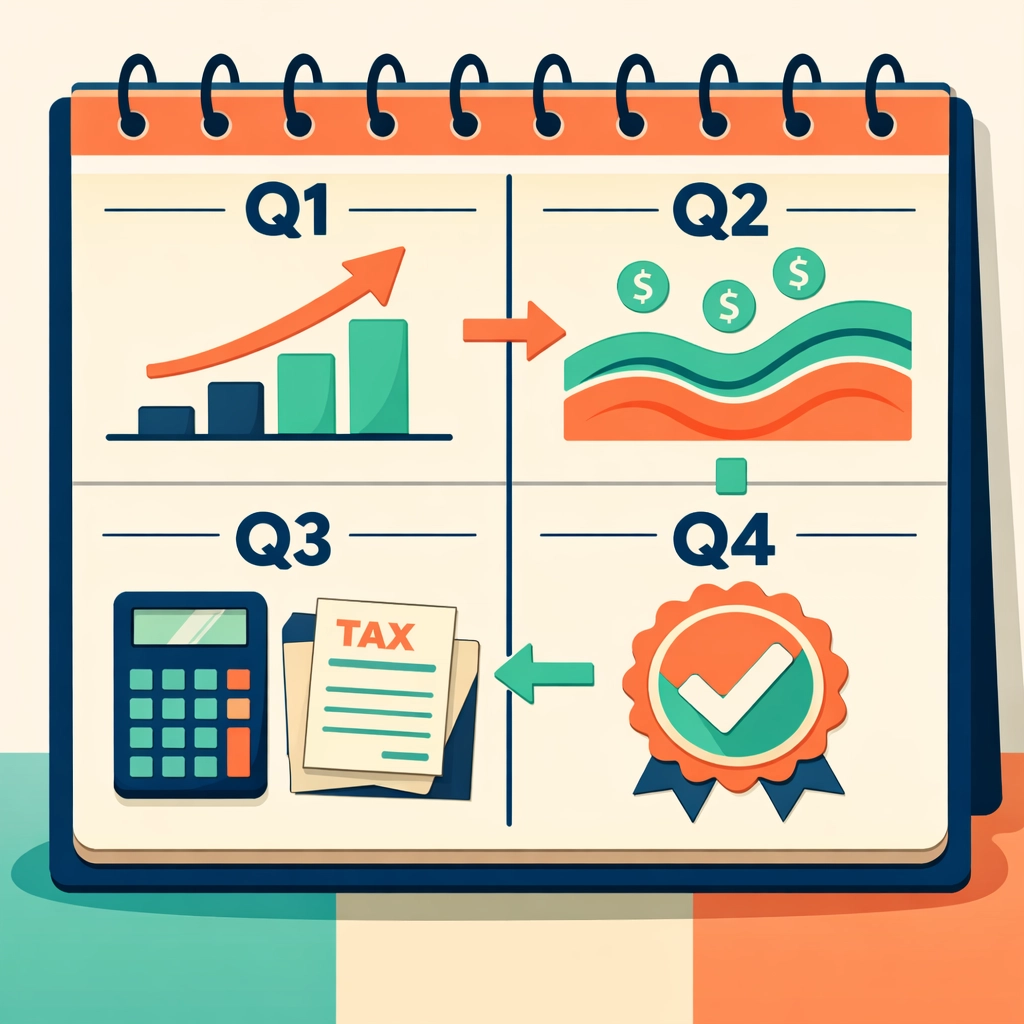
Step 3: Schedule Quarterly Financial Check-Ins
Monthly bookkeeping keeps your data clean. Quarterly check-ins keep you strategic.
Every quarter, sit down and actually review your numbers. Look at:
Your Profit & Loss statement. Are you making money? Where are your biggest expenses?
Cash flow trends. Do you have seasonal dips you need to plan for?
Estimated quarterly tax payments. Are you on track, or do you need to adjust?
Deductions and credits. Are there tax-saving opportunities you're missing?
This is also when you catch problems early. Maybe you notice a contractor you paid $10,000 to and realize you need to send them a 1099. Much easier to handle in June than in February.
If you work with a tax advisor or bookkeeper, these quarterly check-ins are gold. They give your team time to course-correct before year-end, not scramble after.
At Brazen Business Services, this is built into our process. We don't just do your monthly books and disappear. We review your financials regularly so your taxes are built on active, accurate data: not stale numbers from six months ago.
Step 4: Track Deductions and Expenses in Real-Time
Here's where most business owners leave money on the table: they don't track deductions as they happen.
You take a client to lunch in March. By December, you've completely forgotten about it. That's a $75 deduction you just lost.
Multiply that by dozens of small expenses throughout the year, and you're talking about real money.
How to track deductions year-round:
Know what's deductible. Common ones for service businesses: home office, software subscriptions, professional development, travel, meals with clients, contractor payments.
Categorize correctly in QuickBooks. Don't just dump everything into "Miscellaneous." Use the right categories so your tax preparer doesn't have to guess.
Flag big purchases. Bought a new laptop? Make a note that it's a deductible asset. This helps your CPA maximize Section 179 deductions or depreciation.
When you track in real-time, you're not scrambling to remember in January. You're building a clean, complete record as you go.
And clean data doesn't just help with taxes: it helps you make better business decisions. You'll actually know what you're spending and where.
Step 5: Prepare a Year-End Financial Package (Even If You're Not Filing Yet)
By December 31st, your books should be closed and ready to hand off.
This doesn't mean you file your taxes on January 1st. It means your financial records are complete, organized, and documented so that when your tax preparer asks for them, you're ready.
Your year-end package should include:
Completed Profit & Loss statement
Balance sheet
All bank and credit card reconciliations
1099 information for contractors (if applicable)
Receipt documentation organized and accessible
Notes on any unusual transactions or one-time events
This is what we call the Bookkeeping-First Tax Model at Brazen Business Services. Your taxes are built on bookkeeping that's already done: not rushed through in February.
When your books are clean and complete at year-end, tax filing becomes faster, cheaper, and way less stressful. Your CPA isn't hunting for missing receipts or fixing categorization errors. They're just filing.
It's the difference between handing someone a complete puzzle and handing them a box of loose pieces.
Why This Approach Works for Service-Based Businesses
If you're a consultant, coach, freelancer, or service provider, you know your time is your most valuable asset.
You don't have time to spend 40 hours in March cleaning up a year's worth of bookkeeping mistakes.
That's why a systemized, year-round approach makes so much sense. You're keeping your books tax-ready as you go, not scrambling to catch up later.
And when you work with a bookkeeper who uses systemized processes (like we do), you get consistency. Every month looks the same. Every transaction is categorized correctly. No surprises.
Accuracy first means you're making decisions based on real numbers, not guesses. You know what you're actually earning, what you're spending, and where you can save on taxes.
If you've been doing the DIY thing and it's not working, we've written about outsourced bookkeeping vs. DIY here. It might be time to get help.
What This Looks Like in Practice
Let's say you're a service-based business owner bringing in around $150K-$250K per year.
You sign up for monthly bookkeeping support (packages typically range from $297-$497 per month depending on transaction volume and complexity).
Every month, your bookkeeper:
Reconciles your accounts
Categorizes transactions
Prepares monthly financial reports
Flags anything unusual
Every quarter, you have a check-in to review your financials and adjust estimated tax payments.
By December 31st, your books are closed, your year-end package is ready, and you hand it off to your tax preparer.
Tax season? It's just another month. No cleanup. No stress. No scrambling.
That's the power of keeping tax-ready books year-round.
Ready to Stop the Tax Season Scramble?
You don't have to do this alone.
If you're tired of the last-minute panic, the missed deductions, and the stress of messy books, it's time to get systemized.
At Brazen Business Services, we specialize in helping service-based business owners keep clean, accurate, tax-ready books all year long: so tax season is easy.
Schedule a call with Christine to talk about how monthly bookkeeping can change the way you handle taxes.
Let's make next tax season the easiest one you've ever had.
Comments